
Hey!
Currently, I’m sitting at the bear spot watching ten bears come together on an elk carcass. All the other wildlife watchers and I marvel at the calmness and relationships between these Basin bears. The fighting is minimal - hopefully this means that everyone is happy and healthy already.
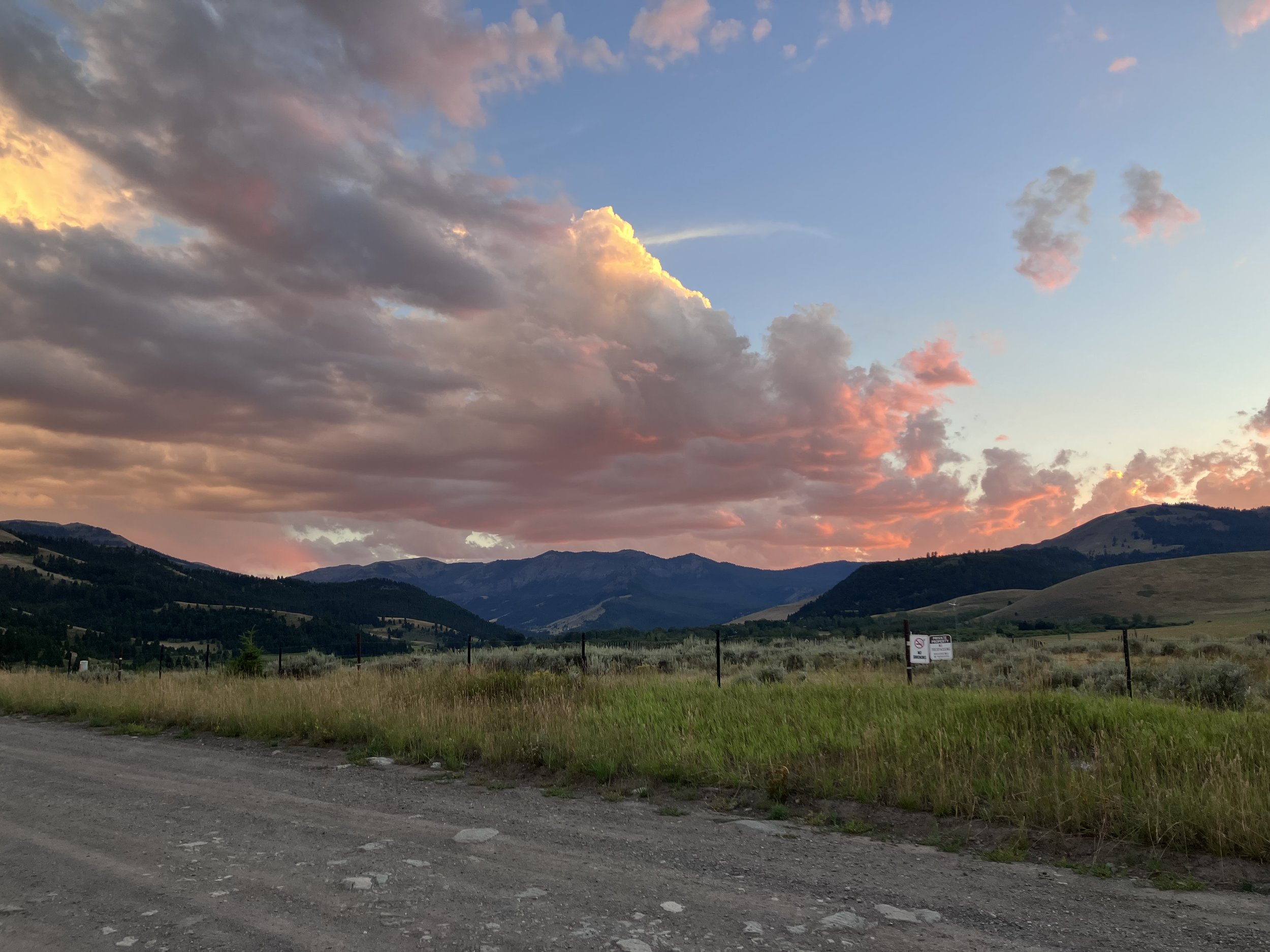
Views from the office…not too shabby
Sitting in the truck also affords me some time for reflection upon the season as a whole.
Some highlights and gratitude:
Getting lost (on purpose)
Getting lost (on accident)
Having a good horse to take you home
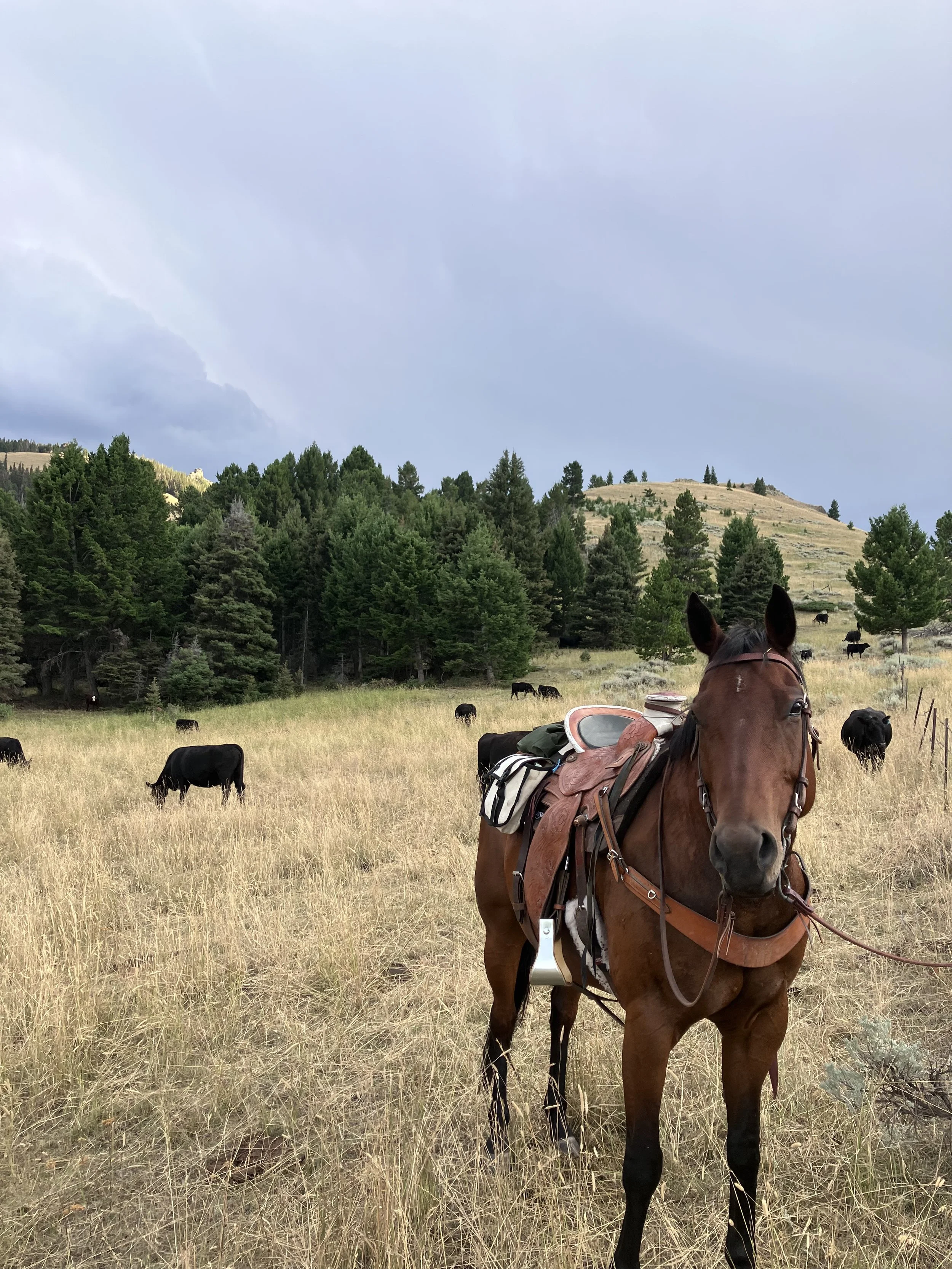
Aphi, the good horse in question. Waiting patiently for me to finish fencing.
These past two weeks I have felt the energy shift. The landscape is hungry and we all know it, the cattle, the bears, the wolves, the coyotes, the elk, deer, the birds, and us - humans. Even my dreams are inhabited by bears and sick calves. Unlike any other job I’ve ever worked, the Tom Miner has a way of drawing you in and sinking it’s teeth - just to give you a gentle shake.
As we wrap up, the cattle are making a final pass on pastures before they come down for sorting, weaning, and get shipped out. With the caveat of still having a few weeks to go, this season has passed without a confirmed cattle depredation event between the three TMBA monitored herds. If this holds true, this will be the second season in a row without cattle lost to predation.
With the emergence of a pattern - questions are raised. Could the lack of predation have something to do with divine feminine bear energy? In other words, do sows with cubs avoid killing cattle? Although no peer-reviewed study has been done on this topic, taking down a full-grown cow requires a large expenditure of energy, which is energy taken away from their cubs. Grizzly mamas are smart, they also know that messing with cattle herds raises their risk for negative human interaction.
Trail cam footage with sow and two cubs
It has been well documented that the Tom Miner Basin is a prolific home to yampah and caraway, both of which are important to the bear diet. With such an abundance of plant nutrition, is it possible that the Basin bears swing towards a vegetarian diet? It is known that grizzlies are opportunistic omnivores and up to 90% of their diet can be plant-based. (“Grizzly Bear,” 2025).
This season, although we have not had any confirmed predation events, we have had a few cattle deaths related to old age and/or illness. These animals have been found quickly and relocated to safe locations to provide a meal for the wildlife. Within the last two weeks alone, two cattle carcasses and two elk carcasses have been noticed and moved. Most of the bears we see already look well-fed and healthy. For these bears that are not desperate for food before winter, killing a live animal would be an unnecessary expenditure of energy. Does the presence of an abundant and varied diet have a positive impact on grizzly-cattle conflict?
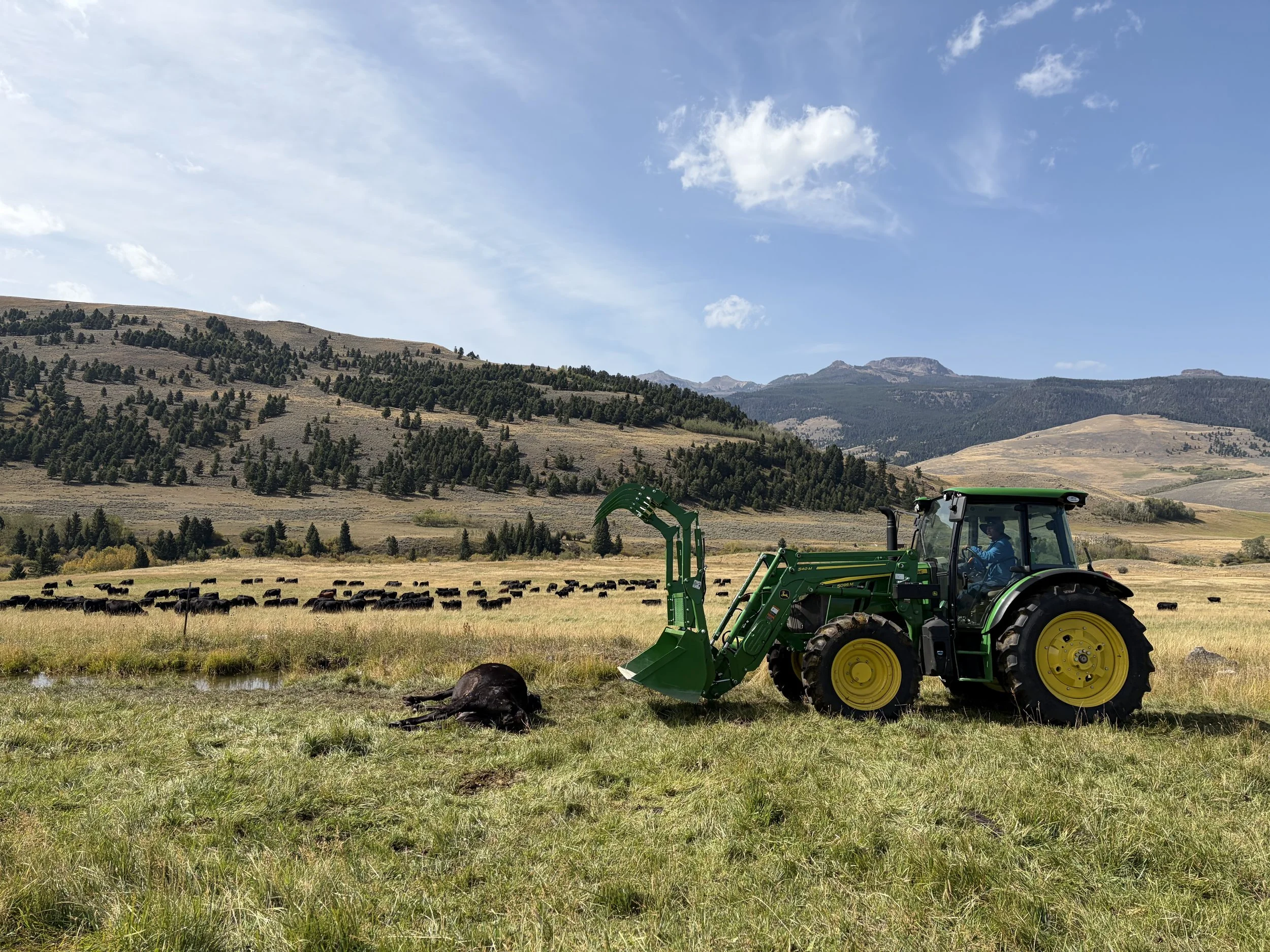
Moving a natural death away from the rest of the herd. She became a meal and a source of energy for quite a few creatures. See video below.
Last question but not least, is the range rider program proving effective? And how can we measure efficacy? A downward trend in predation over time? An analysis of bear behavior and dynamics from season to season? An increase in herd health and land management from both grazing and bear habitat perspectives? It’s an obvious take, but at TMBA we feel that the range riding program is an important part of our mission to reduce both grizzly-cattle conflict and human-grizzly conflict. The real question is: what specifically about the program has been effective in the last two seasons that contributed to lower cattle losses?
And potentially we are just having a healthy dose of good luck.
Until next season, I’ll be thinking about these questions and a few more.
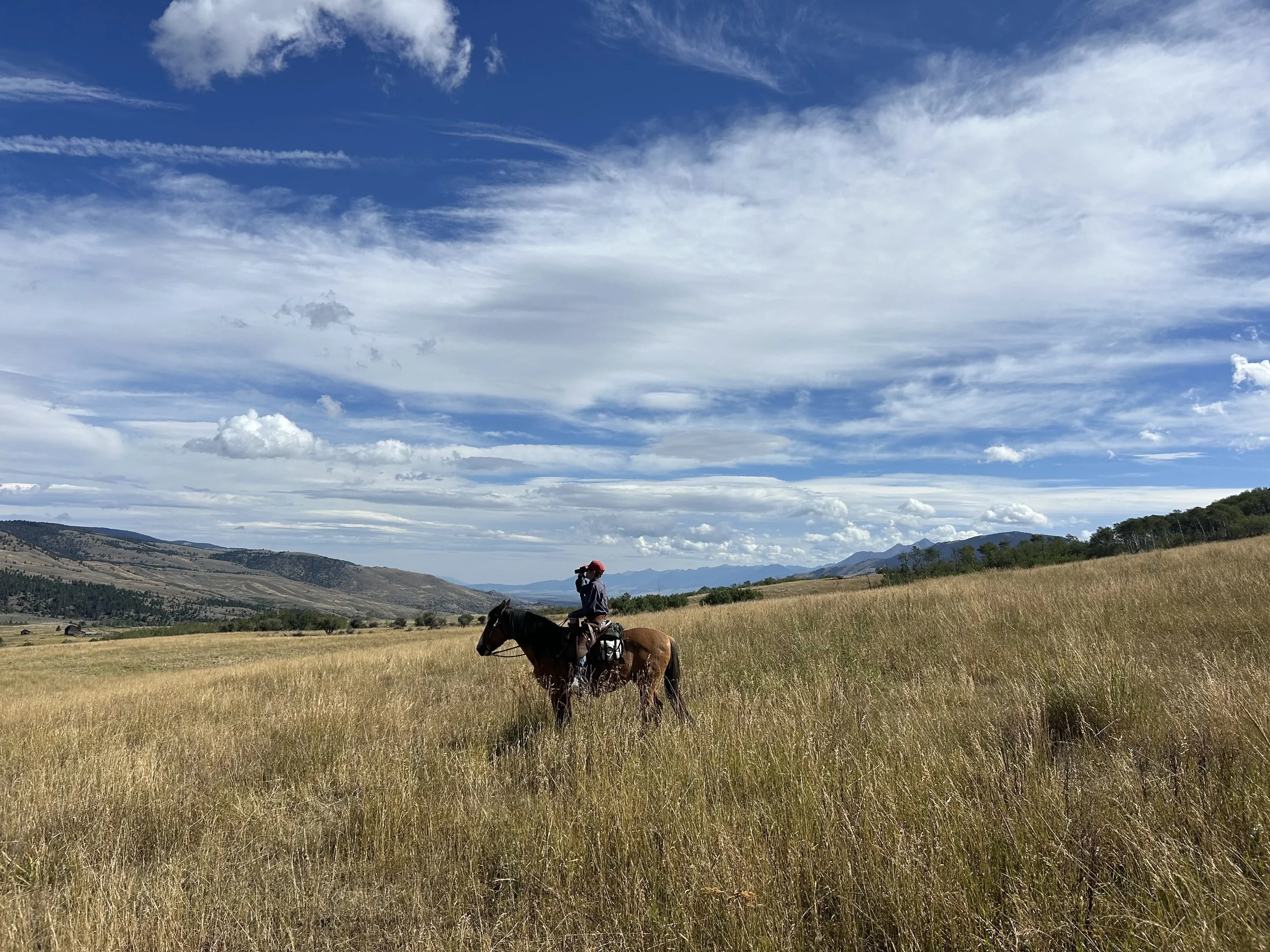
Probably looking at a bear shaped bush.
Citations:
Grizzly Bear. National Wildlife Federation. (2025). https://www.nwf.org/Educational-Resources/Wildlife-Guide/Mammals/Grizzly-Bear
Written by: Emma Hamill, Tom Miner Basin Association’s 2026 Range Rider